
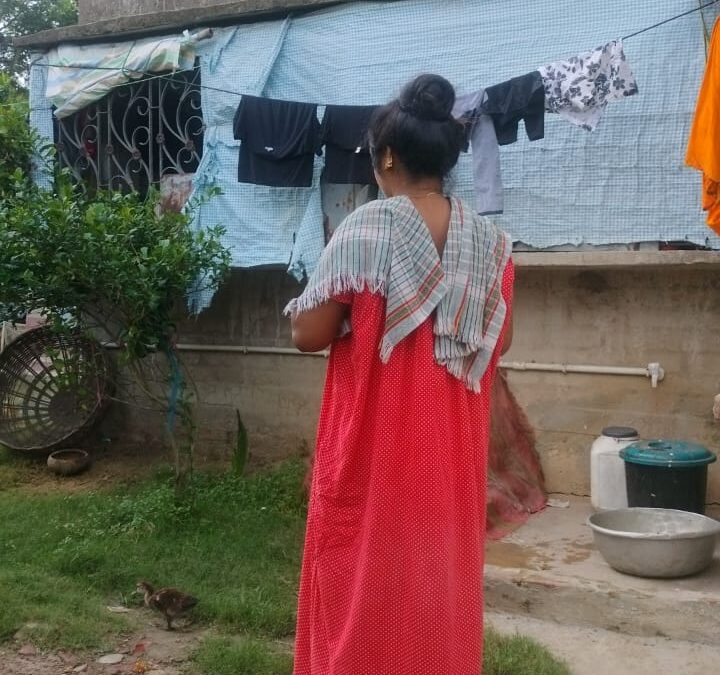
Today, Roma* is no longer living in the red-light area where she spent more than 15 years of her life. She is back in her native place, trying to rebuild her life with the support of her family. As she prepares to begin tailoring work, each small step carries a deep meaning — freedom from debt, freedom from exploitation, and the hope of standing on her own feet again.
Her greatest comfort is knowing that her daughter is safe, studying well, and growing in a Sahaara hostel. For Roma, this means her daughter has the chance to receive the childhood, education, and protection that she herself did not have.
Roma’s story began very differently. At the age of 15, she left her village believing she was going to the city for a job and a better future. Her family was facing severe financial hardship, and she had already been forced to discontinue her education after Grade 7. A person she trusted told her that she could earn a good income and support her parents and siblings. Hoping to help her family, Roma agreed to go.
But when she reached the city, she realised she had been brought to a red-light area. She was young, confused, and afraid. She wanted to return home, but pressure, manipulation, and the burden of her family’s poverty trapped her in commercial sexual exploitation. For more than 15 years, Roma lived through abuse, trauma, and daily exploitation. During this time, she became a mother and continued trying to support her family.
Sahaara staff first met Roma during regular field visits in the red-light area. At first, change was not immediate. But through consistent interaction and relationship-building, Roma slowly began to trust the team and share her concerns. One of her deepest worries was her daughter’s safety, education, and future. With Sahaara’s guidance, Roma decided to enrol her daughter in a Sahaara hostel, where she could study and grow in a safe and supportive environment.
Sahaara also supported Roma herself. She was connected with adult literacy classes, vocational training in women’s apparel, mentoring, and counselling. Tailoring training gave her a practical skill for earning outside the red-light area. Adult literacy strengthened her basic learning abilities, while mentoring helped her identify goals and think about life beyond exploitation.
Counselling gave Roma a safe space to speak about her experiences and challenges. It also helped her make informed decisions, work towards clearing her debts, and prepare to leave the sex trade permanently. With support from Sahaara and her family, especially her parents, Roma cleared her debts, exited the sex trade, and returned to her native place.
Roma says, “I am grateful to Sahaara for supporting me and continuing to follow up on my progress.” Her daughter shares, “I am happy to be in a good hostel and that my mother is no longer working in the red-light area.”
Today, Roma is preparing to start her own tailoring business. Her daughter continues her education in a safe environment. Roma’s greatest hope is to see her daughter complete her education, succeed in life, and build a secure future. Her story reminds us that when a woman receives patient support, livelihood skills, counselling, and a safe future for her child, she can begin to rebuild a life of dignity and hope.
*Name changed to protect identity