
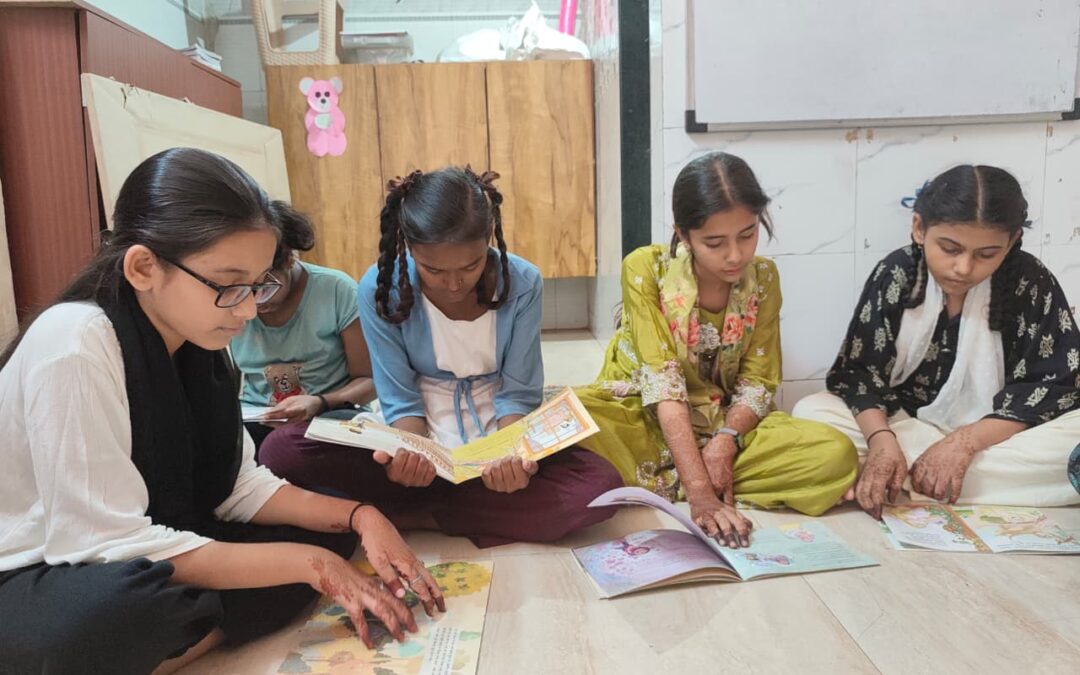
During a storybook activity at the Pratham Centre, Priya* sat with the book in front of her, trying to make sense of the English words on the page.
She wanted to read, but the words felt difficult. English had become one of her biggest struggles. Reading, understanding, and keeping up with her classmates were not easy, and this affected her confidence in school.
Priya comes from a low-income family that faced serious financial challenges, especially during and after the lockdown period. Due to financial pressure, the family had moved back to their native place, which disrupted her education. For nearly three to four years, her schooling was irregular, and she had limited academic support at home.
When the family returned to the city, Priya was re-enrolled in school. But adjusting to the new environment was difficult. She struggled academically, especially in English, where her reading and comprehension were weak. Though she wanted to learn, she found it hard to keep pace with the classroom.
Sahaara staff first noticed Priya’s learning difficulty during a reading storybook activity at the centre. As she tried to read and understand the text, her gaps in English became clear. The teachers recognised that she needed structured support, regular practice, and patient guidance to rebuild her academic foundation.
Through Project Pratham, Priya was enrolled in structured learning support sessions focused on improving her English. She began with phonics, alphabet sounds, and basic word formation. Gradually, she moved towards reading simple words, short passages, and forming sentences. Storybook reading sessions helped her improve comprehension and slowly build confidence.
The teachers also used peer learning, guided practice, and continuous monitoring to support her progress. Learning with classmates helped Priya feel more comfortable, while mentoring encouraged her to remain consistent. Over time, her performance improved from low scores in the first quarter to better results in the following quarters.
Slowly, Priya began to change.
She became more interested in learning and more willing to participate. English no longer felt completely out of reach. With regular support, she began building confidence in her reading and writing skills. Each small improvement helped her believe that she could learn and do better in school.
Priya says, “I was not able to read properly, and English was very difficult for me. Now I feel more confident and can understand better.”
Her mother shares, “Earlier she was weak in studies, especially in English, but now we can see improvement. We are happy with her progress.”
Today, Priya is growing as a learner. With continued support, she is expected to strengthen her academic foundation, perform better in school, and build the skills she needs for the future. She hopes to get a good job one day and support her family.
Priya’s story reminds us that when a child’s education is disrupted, the gaps can feel overwhelming. But with patient teaching, regular practice, and encouragement, learning can begin again — and confidence can slowly return.
*Name changed to protect identity