
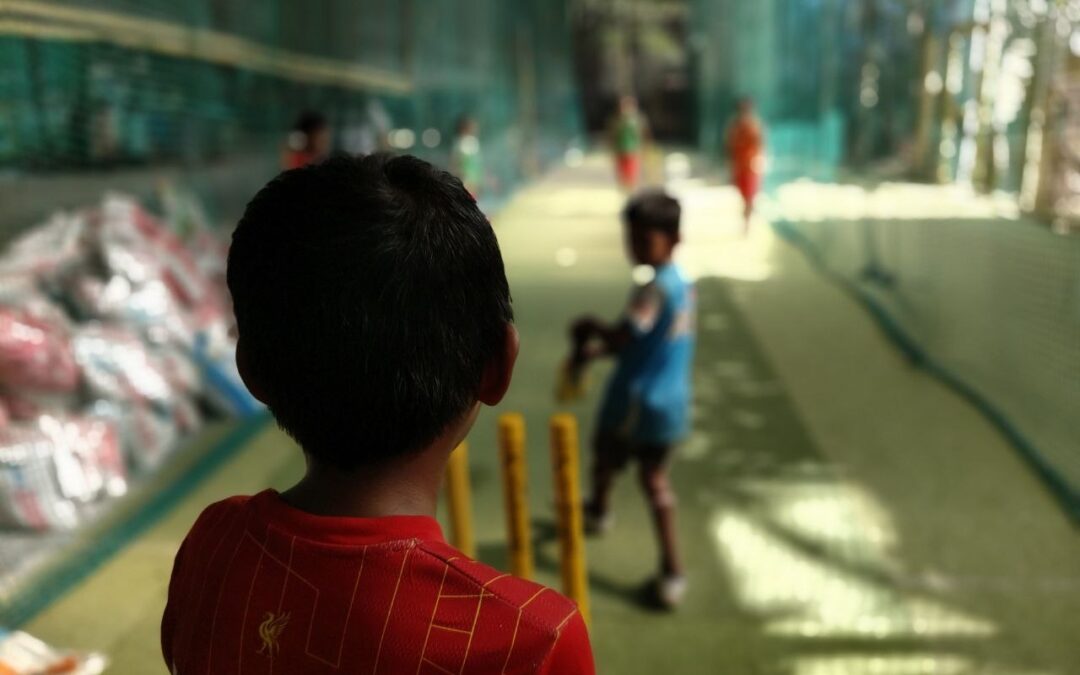
When Sonu* first came to Mahima Boys’ Hostel, he was a little boy carrying emotions that were too heavy for his age.
He wanted to express himself, but his words did not always come easily. Because of his stammer and difficulty pronouncing certain words, he often felt misunderstood in group settings. When he felt upset or unable to explain himself, he would sometimes react through arguments or anger.
Behind those reactions was a child who needed safety, patience, and someone who would help him find better ways to express what he was feeling.
Sonu’s early childhood was shaped by instability and uncertainty. His mother had migrated to Mumbai after marriage, hoping to build a stable family life. However, the marriage became unsafe due to alcohol abuse and violence. In order to protect herself and care for her children, she eventually left the marriage.
With limited livelihood options and the responsibility of providing for her children, Sonu’s mother entered commercial sex work. While she worked hard to support the family, Sonu and his younger brother were often left without the consistent care, supervision, and structure that children need during their growing years.
These circumstances affected Sonu emotionally, socially, and academically. His speech difficulty made it harder for him to communicate confidently. He found it difficult to manage frustration, build positive relationships, and adjust to learning routines. What Sonu needed was not only education, but a safe and nurturing environment where he could be understood, guided, and supported consistently.
In June 2025, Sonu’s mother came to know about Sahaara through the Sahaara Education Team. Recognising the family’s situation and wanting a safer future for her sons, she took an important step. Both Sonu and his younger brother were admitted to Mahima Boys’ Hostel, where they could grow in a stable, protective, and caring environment.
At Mahima, Sonu began receiving the support he needed. He was enrolled in an English-medium school and given remedial education to strengthen his academic foundation. Along with his studies, he received life skills education, counselling, mentoring, and regular guidance from the hostel staff.
The daily routine at the hostel gave him structure. Nutritious meals, medical care, sports, recreation, and supervised study time helped him develop healthy habits. Staff patiently worked with him, helping him understand his emotions, express himself more calmly, and respond to difficult situations in healthier ways.
Slowly, Sonu began to change.
He started learning how to pause before reacting. He began expressing his feelings with more confidence. He learnt that he could ask for help when something felt difficult. Over time, he became calmer, happier, and better able to relate positively with the other boys in the hostel.
The change has been encouraging. Sonu now participates more confidently in school and hostel activities. He receives regular academic support and is making steady progress in his studies. He still needs continued care and guidance, but he is no longer facing his struggles alone.
His mother continues to play an important role in his journey. She remains connected through regular calls and visits, encouraging Sonu and his brother to focus on their education and make the most of the opportunities they are receiving.
Sonu says he enjoys staying at Mahima because he can study, play, learn new things, and receive support from the staff. His mother is grateful to Sahaara and has seen positive changes in his studies, behaviour, and confidence.
Today, Sonu dreams of becoming an astronaut.
For a 10-year-old boy who once struggled to express his feelings and often reacted out of frustration, this dream is a beautiful sign of hope. With continued care, education, counselling, and encouragement, Sonu is learning that his future can be bigger than the difficulties he has faced.
*Name changed to protect identity